 How-to
9 Signs of Hidden Roof Water Damage Homeowners Miss
Quick Summary
Hidden roof water damage usually shows up first as brown, yellow, or gray ceiling rings, peeling paint, or a musty smell upstairs, especially after heavy rain. Check the attic for darkened wood, wet or matted insulation, and mold, and look for curling or missing shingles outside.
- Brown, yellow, or gray ceiling rings often signal water reaching the ceiling, especially after heavy rain or hail.
- A stain that grows or darkens suggests water is still moving, so take dated photos to track it.
- Compressed insulation that stays flat or feels clammy has likely been wet for weeks.
- Rule out plumbing and condensation before assuming a roof leak, since each mimics roof damage.
- Do not walk a wet, steep, or roof older than about 20 years without a professional assessment.
Table of Contents
- Why Hidden Roof Water Damage Is So Easy to Miss
- Visible Warning Signs Inside the Home: Ceiling Stains, Peeling Paint, and Musty Odors
- How to Inspect a Roof After a Storm, Step by Step
- How to Find a Roof Leak With No Visible Damage
- What Roof Water Damage in the Attic and Exterior Looks Like
- Roof Leak Repair Cost and When to Call a Professional for an Inspection
- Frequently Asked Questions
Why Hidden Roof Water Damage Is So Easy to Miss
Last Updated: November 19, 2026
Hidden roof water damage is the kind of problem that grows quietly for months before anyone sees it. Homeowners often only notice a leak after the drywall stains or the attic smells wrong. Learning the signs of hidden roof water damage early can save a lot of money and stress.
Water is patient. It runs along rafters, soaks into insulation, and drips through tiny gaps that never show up on a quick look from the yard. By the time a stain appears on a ceiling, water may have been moving through the structure for weeks.
Most homeowners miss the early signs for three simple reasons:
- Damage hides in the attic. Few people check the space above their ceiling.
- Storms mask leaks. Water may only seep in during heavy rain, then dry out.
- Small stains look harmless. A faint ring can seem like an old, settled mark.
The good news is that you do not need special tools to start looking. A careful walk through your home and a quick check of the attic can reveal a lot.
Visible Warning Signs Inside the Home: Ceiling Stains, Peeling Paint, and Musty Odors
Indoor signs are often the first clue that water is getting past your roof. Check these areas on a regular basis, especially after heavy rain or hail.
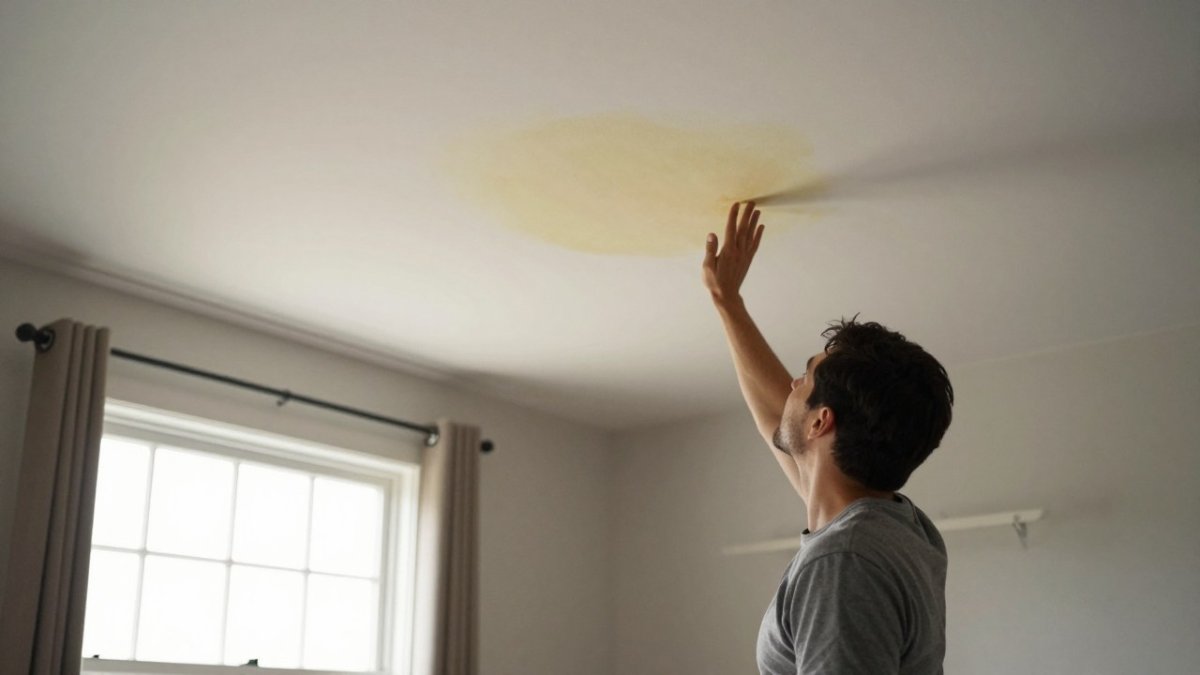
Start with your ceilings. Look for brown, yellow, or gray rings, and note whether they grow after storms.
Next, look at your walls and ceilings for peeling or bubbling paint.
Finally, use your nose. A musty or damp smell in the upstairs rooms can point to moisture trapped in the insulation or decking above.
Tip: Take photos of any stain or peeling area now. Dated pictures help you track changes and support any insurance claim later.
Indoor signs are often the first clue that water is getting past your roof, and the table below summarises what to look for and what each sign usually means.
| Sign | What it suggests | When to check |
|---|---|---|
| Brown, yellow, or gray ceiling rings | Water is reaching the ceiling | After heavy rain or hail |
| Ring that grows or darkens | Water is still moving | Compare photos over time |
| Peeling or bubbling paint | Moisture is pushing paint off | Corners and top edges of walls |
| Musty or damp smell upstairs | Moisture trapped in insulation or decking | Especially when weather changes |
How to Inspect a Roof After a Storm, Step by Step
After a storm, a careful inspection can catch damage before it spreads. Work from the ground first, then move to the attic, and only climb onto the roof if it is safe to do so.
- Walk the perimeter. Look for shingles on the ground, dented gutters, or bent vent covers.
- Check the gutters. Granules from asphalt shingles in the gutters can signal wear or impact damage.
- Scan the roof edges. Look for lifted, curling, or missing shingles along the eaves and ridges.
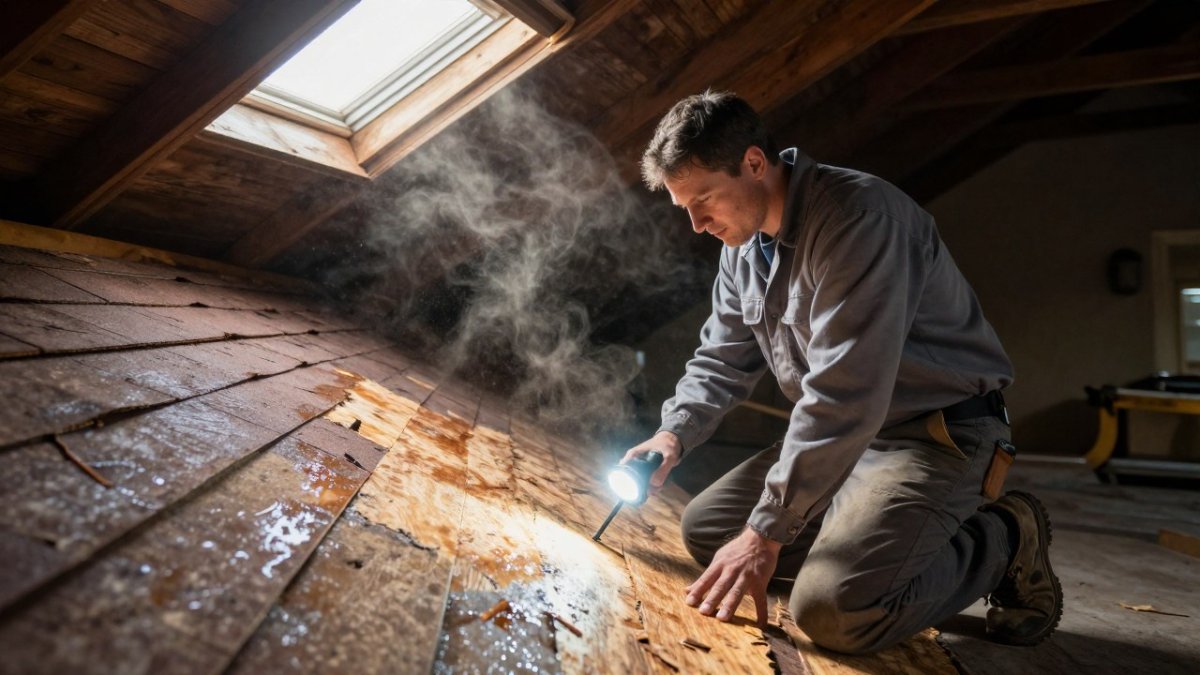
- Inspect the attic. Use a flashlight to check the underside of the roof for wet insulation, dark wood, or daylight coming through.
- Note the date and damage. Write down what you see and take photos before making any repairs.
Stay off wet or steep roofs. If you cannot see the roof well from the ground, a professional inspection is the safer choice.
How to Find a Roof Leak With No Visible Damage
Sometimes water shows up inside your home, but nothing looks wrong on the roof. This happens because water can travel along a rafter or beam before dripping down, so the entry point may be far from the stain.
Rule out plumbing first. Supply and drain lines run through walls and ceilings, and a slow pinhole leak can mimic a roof stain for months. The tell is timing and location.
Rule out condensation next. In humid months, cool attic surfaces can collect moisture that drips onto insulation and ceiling drywall.
Once you have ruled those out, trace the stain upward. Find the highest point of the wet area and check the attic directly above it. Look for water tracks on the wood, dark rings on the decking, or wet insulation. Then check the most common roof leak spots, including:
- Around chimneys and vent pipes
- Where the roof meets a wall
- Valleys where two roof slopes meet
- Around skylights and dormer windows
- At step flashing along sidewalls and where a lower roof meets an upper wall
A simple moisture meter, available at most hardware stores, can confirm whether a stain is actively wet or old and dry. Press the pins into drywall or wood and compare a suspect area to a known-dry spot nearby.
Watch out: do not probe a stained ceiling with a screwdriver or drill to "see what is behind it", you can release trapped water, damage the drywall further, and create a larger repair. Stone's roof repair services can address leaks, flashing damage, and other entry points once they are found.
What Roof Water Damage in the Attic and Exterior Looks Like
Damage in the attic often tells the full story, but you have to know what you are looking at. Darkened or warped wood signals that moisture has been sitting for a while.
Mold or mildew growth on wood surfaces is another warning sign. It usually looks like gray, green, or black patches and gives off a strong, musty odor.
On the exterior, watch for:
- Curling or blistering shingles
- Missing or loose shingles
- Granule loss that exposes the dark mat underneath
- Cracked flashing around vents and chimneys
- Rusted or loose fasteners and nail pops
- Sagging along the roof line or at the eaves
Each of these problems lets water in. Catching them early keeps a repair small and affordable. Homeowners dealing with storm-related water entry can learn about storm damage restoration, including wind-damaged shingle repair. Extra protection for vulnerable areas is available through roof waterproofing. To decide how urgent a finding is, sort what you see into three buckets:
Active leak, act now. Water dripping during rain, a stain that grows within hours, a bulging ceiling, or daylight visible through the roof deck. These point to an open path for water and warrant same-day attention. If a ceiling is bulging, keep people out from under it and call a professional.
Structural concern, act this week. Soft or spongy decking, sagging roof lines, or rafters that feel soft when probed. These suggest the wood has been wet long enough to weaken, and the repair scope grows the longer it waits.
Warning sign, monitor and schedule. Faint old stains, minor granule loss, or a single curled shingle.
Roof Leak Repair Cost and When to Call a Professional for an Inspection
Repair costs depend on how much damage is present, how easy it is to reach, and whether the decking or insulation is affected. A small flashing repair is very different from replacing rotted decking, so the best approach is an on-site inspection. Pricing depends on the scope of the work, so contact Stone's General Construction through its website for current pricing or a quote. When repairs are no longer enough, a complete roof replacement may be the better long-term option.
Call a professional if you notice any of the following:
- A stain that grows or appears after every storm
- Soft or spongy spots on the roof or ceiling
- Musty odors that do not go away
- Missing shingles or exposed decking
- Water dripping during or after rain
Acting early usually costs less than waiting. For a clear quote on your specific roof, contact Stone's General Construction through its website.
Frequently Asked Questions
What are the first signs of hidden roof water damage?
The earliest signs are usually inside the home: yellowish or brown rings on ceilings, peeling or bubbling paint near exterior walls, and a musty smell that persists even after the air is aired out. In the attic, look for damp or compressed insulation and dark spots on the underside of the roof decking. Any of these signs after heavy rain or a storm warrants a closer inspection, because water often travels along rafters and framing before it shows up as a stain in a distant room.
How can you tell if a roof is leaking when there is no visible water?
Leaks often show up as stains, soft drywall, or moisture in the attic long before dripping occurs. Check the attic during or right after rain with a flashlight, looking for wet insulation, dark wood, or water tracking along rafters. Compare the signs with plumbing and condensation sources, such as bathroom fans venting into the attic or cold ductwork sweating. If the moisture appears only near a roof penetration, chimney, or valley, the roof is the likely source.
How do you check for roof leaks after a storm?
Start with a safe ground-level look for missing, lifted, or creased shingles, damaged flashing, and granules collecting in gutters. Then go into the attic during daylight with a flashlight and check the underside of the decking for water tracks, staining, or soft spots. Document everything with dated photos before any cleanup or temporary covering. Avoid walking on a steep or wet roof yourself; a licensed roofer or qualified inspector should handle any closer examination.
When should you call a roofer for suspected hidden roof damage?
Call a roofer as soon as you notice a stain that is growing, an attic that smells musty, insulation that feels wet, or any soft spot on the ceiling or decking. Storm damage with visible shingle loss or exposed decking also needs prompt attention. A professional inspection can confirm the source, estimate the scope, and recommend temporary mitigation so further water intrusion is limited while repairs are scheduled. You can request a free roof quote through the Stone's General Construction website.
